How To Identify and Get Rid of Carpenter Ants | The Family Handyman
Carpenter ants may non swallow the wood they chew, only they tin still cause a lot of damage to your abode. Got carpenter ants? Here's what to know.
On the march to notice a moist, cozy place to couch and build their nests, carpenter ants munch through dead, wet wood hands, creating tunnels and cavities to lay eggs and abound their colonies.
Recall you might have a community of carpenter ants in or near your abode? Earlier you panic, hither are some facts you should know about these insects.
What Is a Carpenter Pismire?
Related to bees and wasps, a carpenter ant (sometimes referred to as a flying ant) is a member of the Formicidae family of insects. Carpenter ants live in large colonies with workers, scouts and a queen. They can be found in wooded areas, suburbs and cities. They are one of the largest and most common ant species in the U.S.
To the untrained eye, carpenter ants and termites may look alike, only they are not the same insect.
What Practice Carpenter Ants Wait Like?
Here'due south how to spot the difference between a carpenter emmet and a termite:
Carpenter ants
The main identifying characteristics of carpenter ants:
- Measure between 1/2-in. to five/viii-in.;
- 3 torso segments;
- Narrow waist betwixt the abdomen and thorax;
- Big heads with elbowed (bent) antennae;
- A pair of wings (backs shorter than the fronts);
- Nighttime red, blackness, brownish or a combination of those colors.
Termites
Termites, on the other hand, are no bigger than a dime and have these features:
- Two body segments;
- Wings of equal length and longer than their body;
- A thick, unpinched waist;
- Straight antennae;
- Lite in colour or transparent.
What Attracts Carpenter Ants?
The first line of defence force against an invading pest is to sympathise what it likes and doesn't similar. Here are the main things carpenter ants are attracted to:
Soft, wet wood
Carpenter ants adore dead, decaying and moist timber. It'due south their reason for living.
Nutrient
Their main source of nutrition is honeydew excreted from aphids they subcontract. Carpenter ants also feast on the nectar of plants and pocket-sized insects. Inside homes, they'll happily eat protein and sugary substances left out on the counters and in garbage pails. In the yard, carpenter ants are drawn to the food in pet bowls and meat juices on charcoal-broil grills.
Clammy and dark places
Along with hiding in dewy, decomposing wood, you'll oftentimes notice carpenter ants colonizing backside dishwashers and air conditioning units, in the backs of moldy cabinets or around leaky pipes.
What Repels Carpenter Ants?
On the flip side, here is what carpenter ants hate:
Dry weather
Carpenter ants need a water source to survive and thrive. Eliminating wet in your home and standing h2o in the yard is half the battle.
Potent odors
Essential oils like lemongrass, peppermint, clove, cedarwood, tea tree and citrus disrupt their olfactory property trails, leaving them mazed and confused.
Signs of Carpenter Ants In and Around Your House
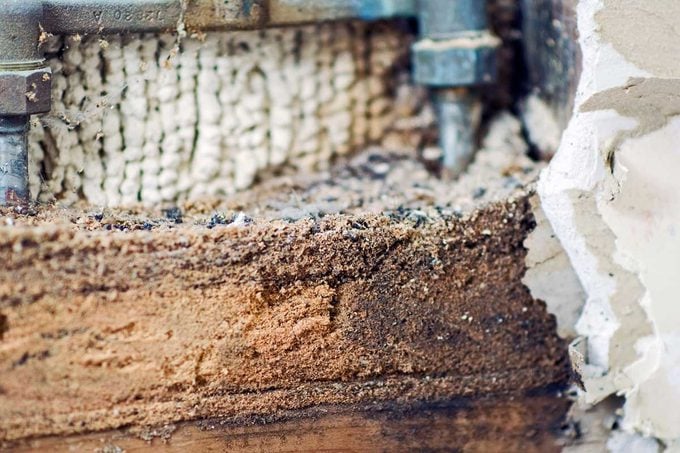
There are clues to indicate a colony of carpenter ants may be hiding somewhere on your property. Things to watch for include:
- Sawdust, insulation or wood shavings on the basis (extermination pros call it "frass");
- Visible impairment to wood (ruts or groves on the surface);
- Crackling sounds inside walls;
- Dead insect carcasses;
- Shed wings;
- Seeing the ants themselves.
Are Carpenter Ants Dangerous?
While carpenter ants do have a painful bite that can break the skin, they are generally regarded equally harmless.
On the other mitt, left to their devices, carpenter ants can potentially destroy your habitation from the inside out. Their chewing action breaks apart decaying logs. If they build a nest in a support beam of a abode, it could severely weaken the structure. And just think what they could practise if they get their jaws on your wooden deck!
Take it from Ed Spicer, CEO of Pest Strategies: "The carpenter ant is the ant yous want to lookout man out for when it comes to belongings damage and abode devastation."
How To Get Rid of Carpenter Ants
The all-time way to rid yourself of carpenter ants is to discover the nest and impale the queen. Hither are some steps to help y'all discover and destroy a carpenter pismire nest indoors and out.
Step one: Locate the nest. Follow a scent trail or check suspect wood for visible signs of damage, keeping in heed that ants commonly forage about 300 feet from the nest. Indoors carpenter ants can often be found nesting well-nigh sinks, tubs and other loftier-wet zones. Outdoors, check around tree stumps, firewood stacks and wood structures with obvious moisture impairment.
Step 2: Destroy the nest. One time you lot locate a nest indoors, utilize insecticide grit by drilling holes into the wall where the nest is suspected and inject the dust. You can likewise apply not-toxic borax, boric acid or diatomaceous world. You may take to repeat the treatment several times. If the nest is outdoors, drench it with a sprayer of liquid insecticide.
Annotation: Insecticides tin be harmful to children and pets. Follow the label'southward instructions carefully.
Step 3: Put out bait. If you tin't discover the nest or it is hard to access, place slow-acting granular bait (tamper-resistant bait stations, if you have children or pets) most entry points and moist areas where ants are likely to gather. You can as well spray foam or gel baits into voids, through boom holes into walls, around gaps in plumbing and into ant tunnels themselves. Ants will hopefully bring the allurement dorsum to the nest and kill the entire colony, queen and all.
Note: Never spray ants with pesticides. Killing them individually defeats the purpose, because a dead worker or lookout man tin can't bring the bait back to the colony to share with its comrades.
Step four: If Steps i, 2 and iii are unsuccessful, call a pest control expert in your area who specializes in carpenter ant control.
How To Foreclose Carpenter Ants From Getting Into Your Abode
Carpenter ants are big compared to other ants, but they're notwithstanding ants and therefore can hands enter your abode through frame joints, cracks in the foundation or gaps under doors. To avoid the hassle and expense of eliminating an infestation of carpenter ants, take the following steps to discourage them from building a nest in or around your home.
- Go on food in airtight containers and clean upward spills and crumbs;
- Seal cracks and holes;
- Trim vegetation back from the house;
- Remove rotted or infested wood;
- Raise firewood off the ground;
- Spray a chemical or non-toxic insecticide barrier around your home.
Source: https://www.familyhandyman.com/article/carpenter-ants/
0 Response to "How To Identify and Get Rid of Carpenter Ants | The Family Handyman"
ارسال یک نظر